David’s article on Forbes
- Published on Saturday, 31 March 2012 15:36
- Written by Brad Arnold
More than Steve Jobs: Why Apple Deserves A Museum
David Coursey, Contributor – TECH – 3/31/2012 @ 7:40PM
Please indulge me a moment and imagine that I’m standing at a podium. I’m also in front of a large group of assembled people. So, OK, thanks, here I go –
“Hi, my name is David, and I’m . . . an Apple fanboy.”
First there’s shocked silence, then applause starts quietly and builds to a thundering volume. There, I did it . . . I admitted it.
This is a guest post by computer historian David Greelish
Even better, I’m not alone, there are many others. My little visual here is not to imply that myself or others have a problem, but that there are plenty of serious Apple fans around. We love the products, and many of us love, or at least have a high regard for, the company.
I live on the east coast, but I have been to Silicon Valley twice; visiting the “mothership” was a must-do for me. Perhaps you might feel the same way. It’s exciting for us fans, though all you can really do is park, take pictures out in front of the main 1 Infinite Loop building, and the Apple sign near the street, then visit The Company Store.
It’s a special treat as they don’t sell Apple devices, they sell logoed items not found anywhere else. I don’t know if I would go so far as to call my visit a pilgrimage, but it was a top priority for me, if I was going to be anywhere near Silicon Valley.
So now let’s ponder that new Apple campus that Steve Jobs announced to the Cupertino City Council in June of last year. It’s set to open sometime in 2015. It’s just beautiful and very unique, as Apple has reversed the typical ratio of 80% building to 20% landscaping to just 20% building and 80% landscaping!
It definitely looks like a sort of flying saucer, or more accurately, a flying ring. I know I’ll want to visit this campus one day and I’m sure even more fans will also want to as well. Plus, architects, artists, students, tourists, and the just plain curious. The new campus will become a mainstream destination and Apple needs to realize this, and more importantly, embrace it.

I have what I think is a great idea, and this article serves as a vehicle to plant the seed of this idea, hopefully even to Apple’s leadership team. First though, and in all frankness, a corporate museum is something that Steve Jobs himself had been against. He certainly would have continued to be so, if he was still living, but that’s another key consideration.
Computers Go To War
- Published on Saturday, 31 March 2012 12:38
- Written by Brad Arnold
[pdf-embedder url=”https://www.atlhcs.org/wp-content/uploads/2012/06/wwii.pdf” title=”Computers Go to War (WWII)”]
March 31st Meeting – Computing in World War II
- Published on Wednesday, 21 March 2012 20:46
- Written by Brad Arnold

Photo of the British machine, Colossus
From predicting trajectories of artillery shells, bombs, and ballistic missiles to code breaking to atomic bomb design, the second World War provided more impetus for the development of computing machinery than any other event in human history. In this presentation by Dr. Brian Stuart, we will look at the convergence of a century of mathematical, mechanical, and electronic work to set the stage for the computer as we know it today.
Surface Mount Soldering Demonstration
- Published on Saturday, 18 February 2012 14:00
- Written by Brad Arnold
On March 3rd, we get to experience a realtime “Surface Mount Soldering Demonstration” by Alan Hightower. These days, it’s getting harder to find the old through-hole components, like the ones we saw in the 1980’s. Projects often require that surface mount parts be used.
They are ubiquitous in modern computers, are found in some vintage computers and are often essential in new boards to support vintage computers. Alan will be demonstrating surface mount soldering techniques which you can use at home to get results much like the modern boards you see today. The presentation will include:
- An overview of surface mount packages and tools.
- Demo of stencil solder paste application to a surface mount board.
- Reflow soldering of the whole board, using hot-air and a pre-heater.
- Soldering iron techniques for cleanup and rework.
- Drag soldering of components, which can’t take reflow heat.
Whether you’re a DIY builder or a vintage computer enthusiast, you’re sure to be intrigued by seeing what goes on behind the curtain to make electronic boards today.
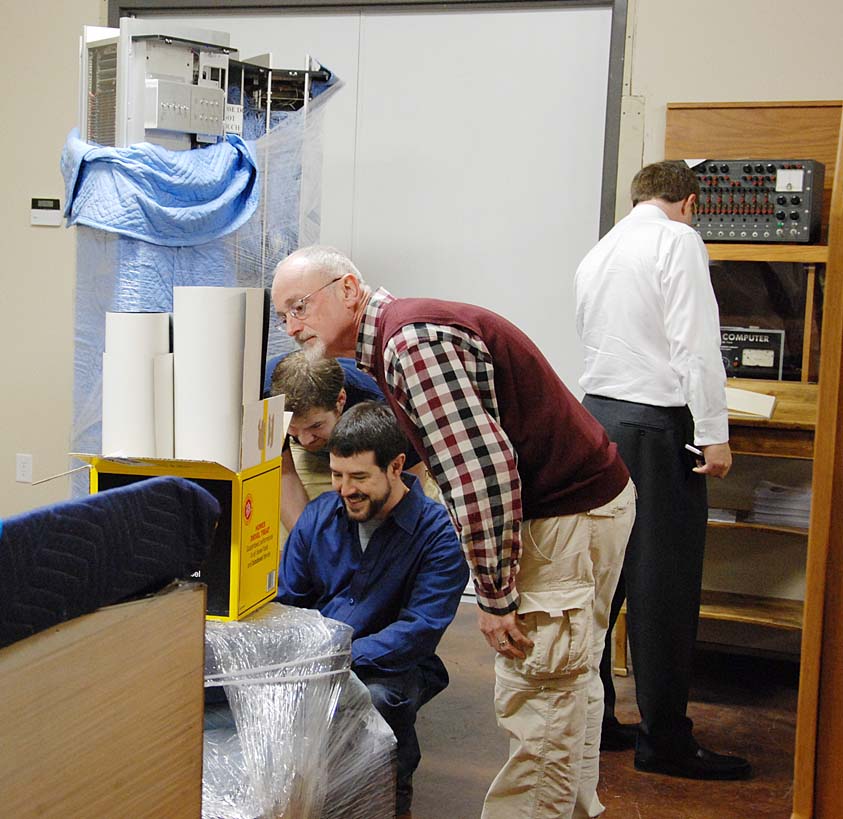
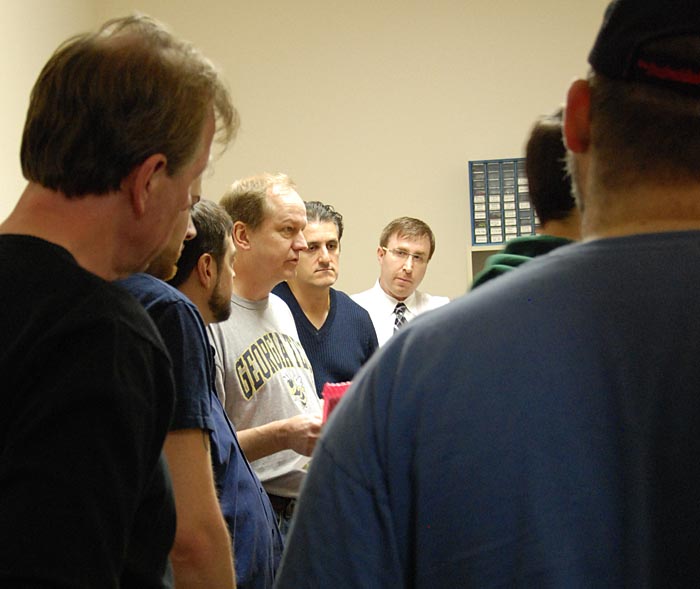
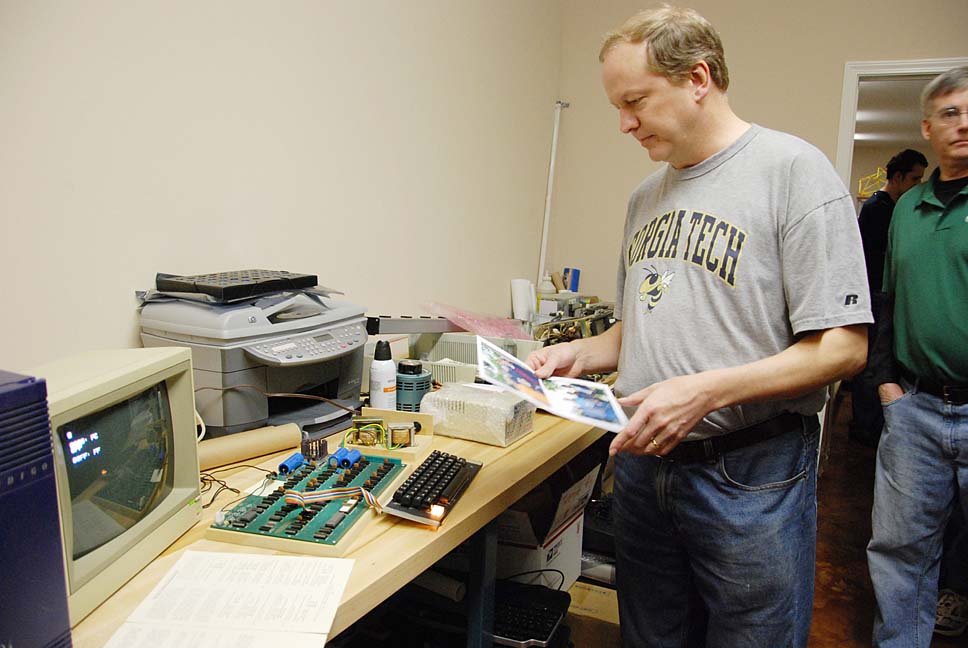
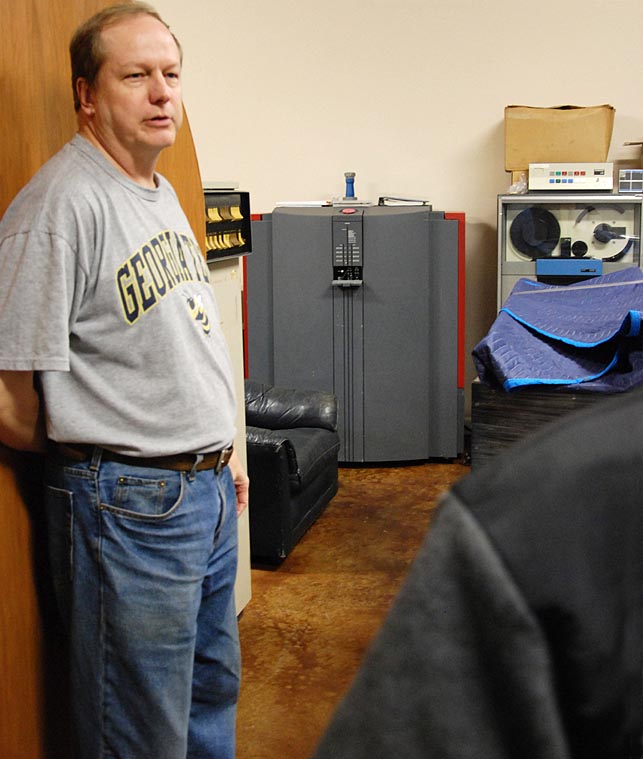
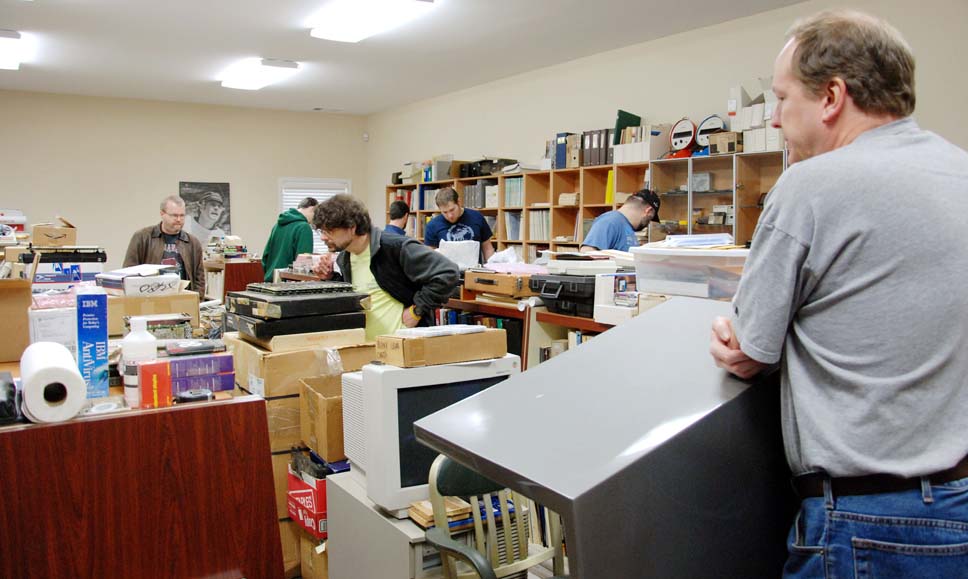
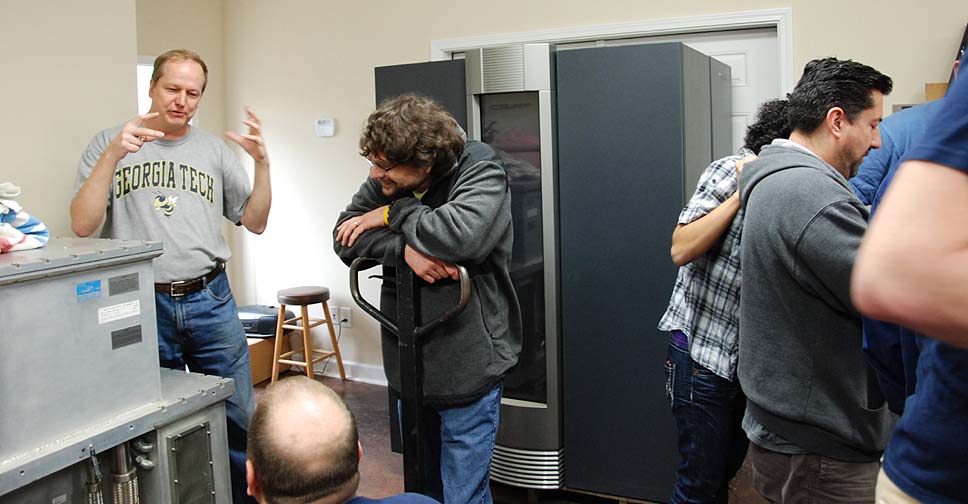
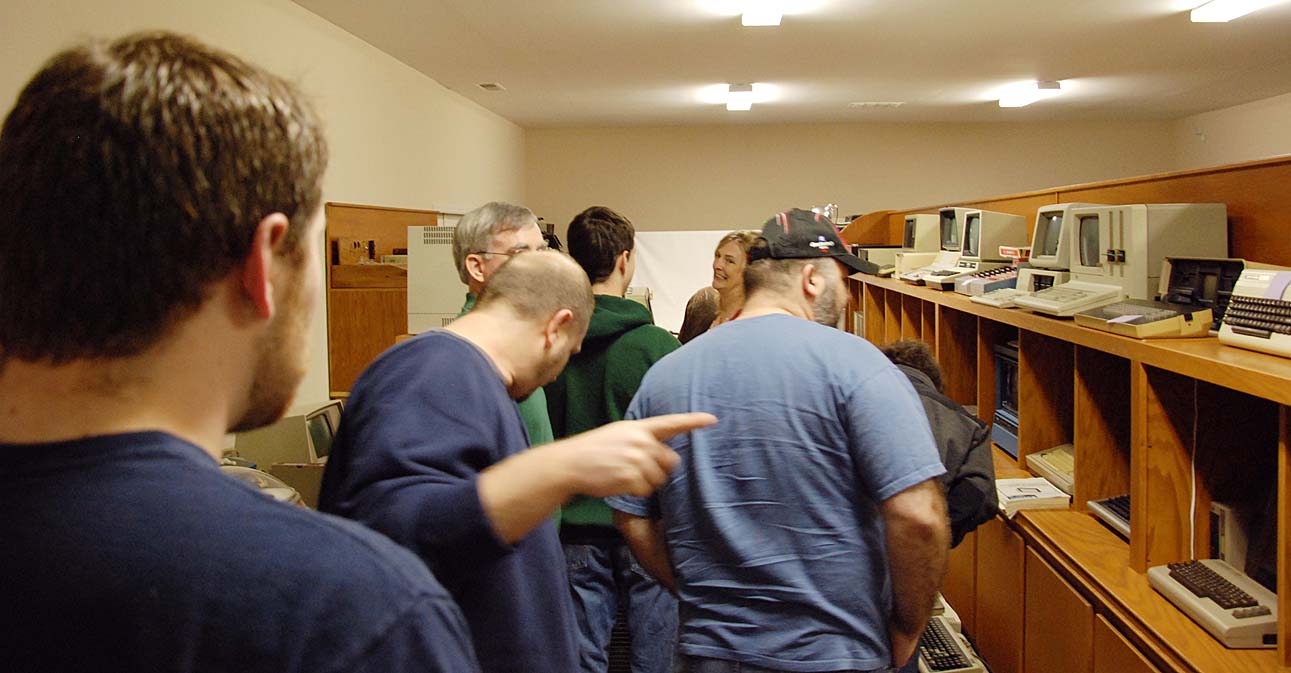
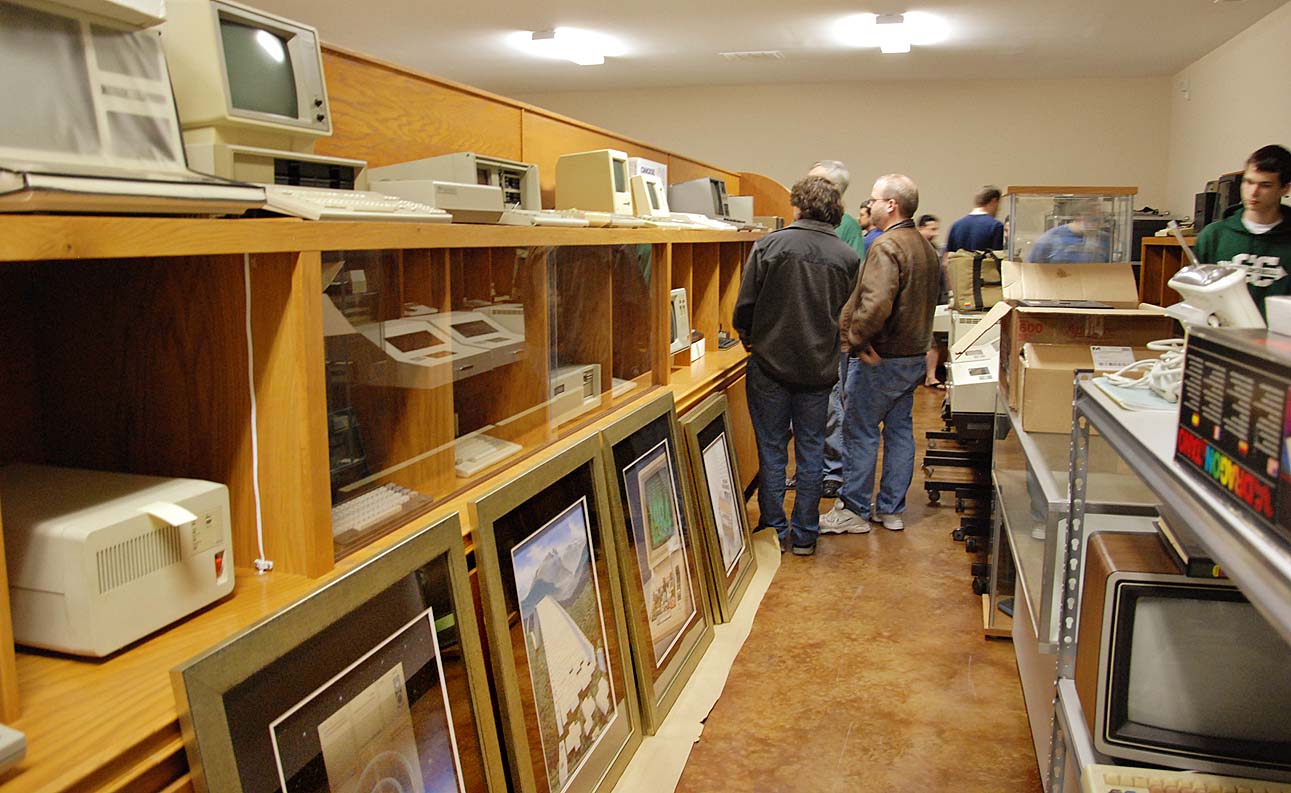
A Private Tour of the Mimms Vintage Computer Collection
- Published on Friday, 17 February 2012 12:00
- Written by Brad Arnold
Vintage Computing on Modern Hardware – Feb 4 Meeting
- Published on Saturday, 04 February 2012 17:34
- Written by Brad Arnold
The meeting Saturday, February 4th looks to be lots of fun, with several members demonstrating software emulators which run on a modern hardware but simulate historic computers.
These will include:
- Amiga by Brad Arnold
- Commodore by Raj Wurttemberg
- SIMH (an emulator which does many historic machines) by Dr. Brian Stuart
- UNIVAC Simulator Presentation by Steve Lafferty
While few of us can afford to own many vintage machines, the emulators are generally free, so we can all enjoy interacting with history this way. The presenters will do demos, talk a little about the emulators and represented machines and tell us how to get them.
One thing I found from preparing my part (UNIVAC), is that getting these running and doing interesting things isn‚t as easy as one might imagine. The folks presenting will give us the tips we need to have fun with these critters, easily. Should be a hoot!
Directions to Christ the Lord Lutheran Church
Hope to see you there!
Steve L.
Program Coordinator
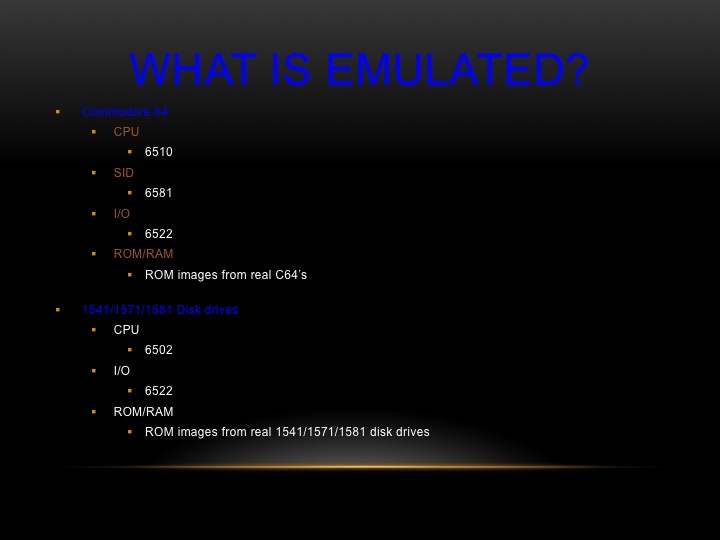
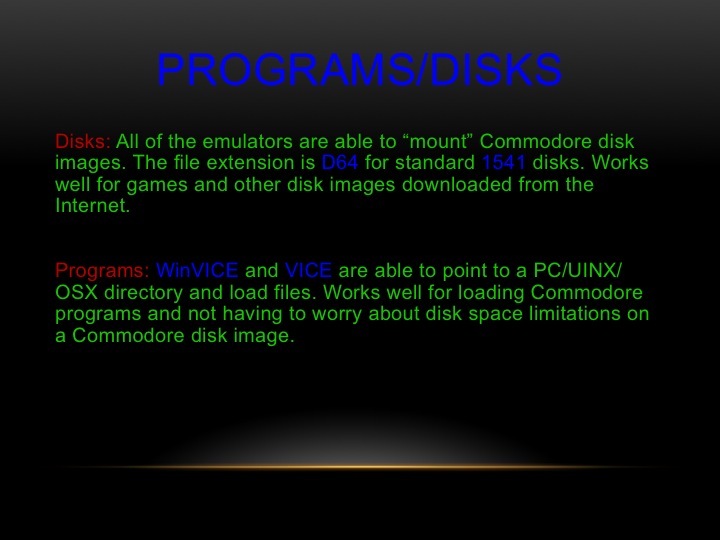
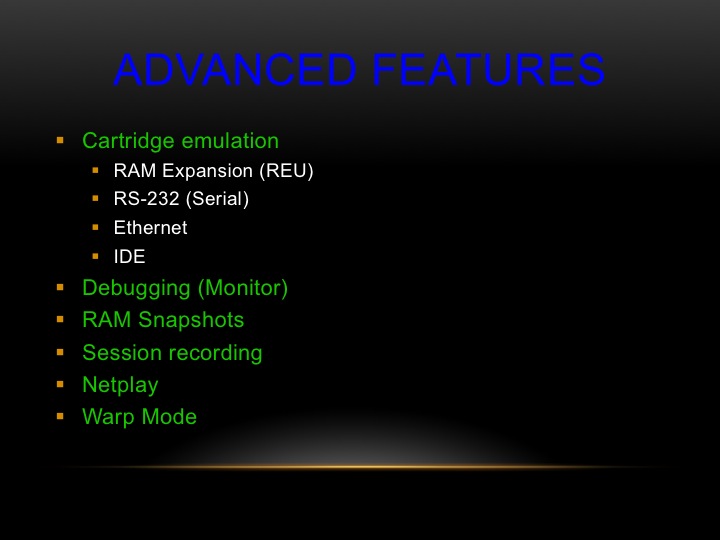
Commodore 8-bit emulation
- Published on Saturday, 04 February 2012 14:49
- Written by Brad Arnold
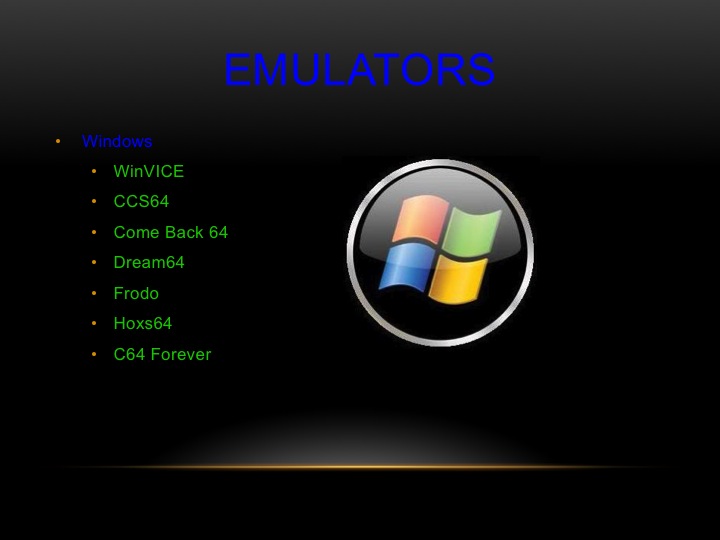
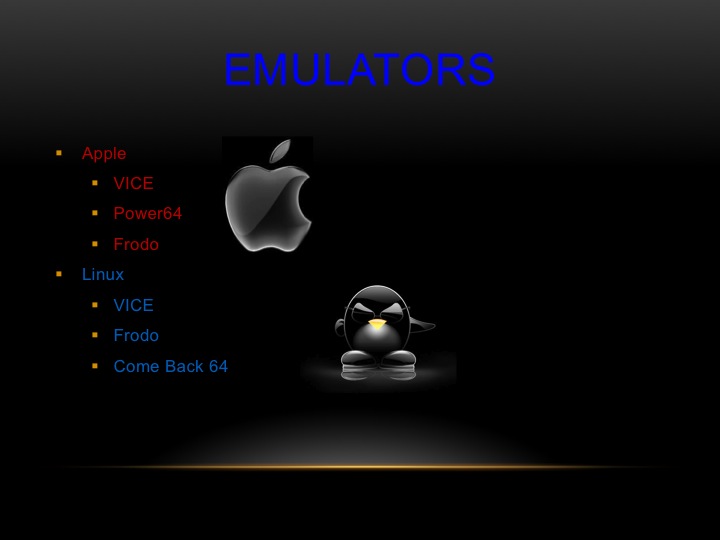
Commodore 8-bit emulation slideshow by Raj Wurttemberg
SIMH: A Portable set of Simulators for Historic Machines
- Published on Saturday, 04 February 2012 14:35
- Written by Brad Arnold
[pdf-embedder url=”https://www.atlhcs.org/wp-content/uploads/2012/02/simh.pdf” title=”SIMH”]
UNIVAC Simulator Presentation
- Published on Saturday, 04 February 2012 09:48
- Written by Brad Arnold
[pdf-embedder url=”https://www.atlhcs.org/wp-content/uploads/2012/02/univac-simulator-presentation.pdf”]
Support AHCS
AHCS can use your support. Contributions allow us to continue bringing you exciting events and give you the opportunity to meet like minded people who share an interest in Vintage Computing. We would greatly appreciate any contributions.
